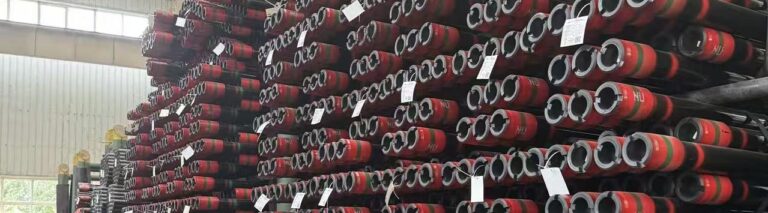
OCTG Supplier | Trusted Oil Country Tubular Goods Partner List-2026


This article, from the perspective of an OCTG supplier with 20 years of industry experience, provides a systematic analysis of OCTG suppliers worldwide, covering different regions, specifications, and steel grades. It focuses on major OCTG suppliers in China and the UAE, as well as representative OCTG manufacturers and traders from other regions globally. The article analyzes their characteristics in terms of product range, supply capacity, quality control, delivery time, certifications, and project service capabilities to help you select more reliable partners for your oil and gas projects.
What Is an OCTG Supplier?
An OCTG supplier is a company that manufactures, stocks, and distributes Oil Country Tubular Goods — the specialized steel pipe products used to drill, complete, and produce oil and gas wells. These suppliers occupy a critical position in the upstream value chain, bridging the gap between steel mills and the exploration and production (E&P) operators who need certified tubulars delivered on schedule and to specification.
Key Products Supplied by OCTG Manufacturers
The product portfolio of established OCTG manufacturers spans every tubular component required to drill, complete, and produce a well. While product naming varies across regions and trading desks, the core categories are governed by a small set of API and ISO specifications. The table below summarises the five primary product lines that most OCTG pipe manufacturers keep in regular stock.
| Product Category | Governing Standard | Common Grades | Typical Connections |
| Seamless Casing | API 5CT / ISO 11960 | J55, K55, N80, L80, P110 | BTC, STC, LTC |
| Tubing Strings | API 5CT / ISO 11960 | J55, L80, N80-1, P110 | EUE, NUE, premium |
| Drill Pipe | API 5DP / ISO 11961 | E75, X95, G105, S135 | NC, IF, FH (tool joints) |
| OCTG Connections | API 5B + proprietary | — | BTC, LTC, STC, premium gas-tight |
| Line Pipe | API 5L / ISO 3183 | B, X42, X52, X60, X65, X70 | Bevelled ends / flanged |
Top OCTG Pipe Suppliers and Manufacturers Worldwide
Asia-Pacific OCTG Manufacturers
Website: BalingSteel
Main Products: Casing and Tubing, line pipe,Premium connection.
Advantages: BalingSteel’s key strength is its ability to combine competitive pricing, flexible service, and access to China’s major OCTG manufacturing resources, including Baosteel Group, TPCO, Hengyang Valin Steel Tube, Jiangsu Changbao, and other qualified steel pipe mills. This allows customers to compare different production options, select suitable API 5CT grades, control procurement costs, and receive more efficient support for casing, tubing, couplings, and related oilfield pipe products.
Website: TPCO International
Main Products: Seamless casing, tubing, line pipe, high-collapse casing, boiler tubes, mechanical tubes, and other seamless steel tubular products for oil and gas applications.
Advantages: TPCO is one of China’s most recognized seamless pipe manufacturers, with strong OCTG production capability, broad size coverage, and experience in supplying casing and tubing for oilfield projects. It is suitable for buyers looking for large-volume API casing, tubing, and high-collapse OCTG solutions.
Website: Baosteel
Main Products: OCTG products including casing, tubing, drill pipe, seamless steel tubes, line pipe, boiler tubes, and specialty steel pipe products.
Advantages: Baosteel has strong technical strength, a wide OCTG product range, and experience in supplying both domestic and international oil and gas projects. Its advantages include stable quality control, API standard product capability, premium connection development, and strong support for demanding oilfield applications.
Website: Valin Steel
Main Products: Seamless casing, tubing, line pipe, drill pipe, boiler tubes, pressure pipes, mechanical tubes, and other seamless steel pipe products.
Advantages: Hengyang Valin Steel Tube is a major Chinese seamless steel tube manufacturer with strong rolling capacity and experience in API 5CT, API 5L, and API 5DP products. It is suitable for buyers who need API casing, tubing, line pipe, and drill pipe from a large-scale Chinese mill.
Website: Nippon Steel Pipes and Tubes
Main Products: OCTG, line pipe, seamless and welded steel pipes, high-grade oil well pipes, pipeline products, power generation tubes, and specialty pipes for harsh environments.
Advantages: Nippon Steel is known for advanced steel technology, high-strength materials, corrosion resistance, toughness, and reliable pipe products for harsh oil and gas environments. It is especially suitable for high-end projects involving offshore drilling, deep wells, low-temperature regions, and corrosive operating conditions.
Website: JFE Steel OCTG
Main Products: OCTG casing and tubing, high-end materials, 13Cr grades, UHP 15Cr/17Cr materials, sour service products, high-collapse casing, and premium connections such as FOX™, JFEBEAR™, JFETIGER™, and JFELION™.
Advantages: JFE Steel is strong in high-performance OCTG for deeper, higher-pressure, and more corrosive wells. Its advantages include premium connection technology, sour service solutions, high-collapse design, CRA materials, and technical support for demanding oil and gas drilling conditions.
Website: SeAH Steel Oil & Gas
Main Products: API 5CT casing and tubing, API 5L line pipe, conductor casing, ERW and SAW steel pipes, high-pressure pipes, stainless steel pipes, and oil and gas transportation pipes.
Advantages: SeAH Steel is a strong Korean welded pipe manufacturer with ERW, SAW, threading, and coupling capability. Its OCTG products cover API 5CT casing and tubing, API 5L conductor casing, and grades such as J55, K55, N80, L80, P110, SeAH80, and SeAH90. It is suitable for buyers looking for Korean line pipe, conductor casing, and welded OCTG solutions.
OCTG Supplier in UAE and the Middle East Market
Website: Pemco Official Website
Main Products: OCTG, casing, tubing, line pipe, drill pipe, and related tubular accessories.
Advantages: Pemco is a UAE-based tubular stockist and distributor serving oil, gas, water, and geothermal industries. Its main advantage is inventory availability and flexible sourcing from its network of manufacturers. This makes Pemco suitable for buyers who need regional stock, faster delivery, and combined supply of OCTG, line pipe, drill pipe, and accessories.
Website: Hunting Official Website
Main Products: OCTG, premium connection technology, casing accessories, tubing accessories, pup joints, crossovers, couplings, downhole accessories, and pressure-control-related products.
Advantages: Hunting is strong in premium connection technology and OCTG accessories. It designs and manufactures premium connection technologies and sells OCTG from leading manufacturers. Hunting is suitable for customers who need premium connections, OCTG accessory manufacturing, threading-related services, and technical support for higher-value oil and gas projects.
Main Products: Premium OCTG, casing, tubing, VAM® premium connections, tubular management services, and oilfield tubular solutions.
Advantages: Vallourec is a global premium tubular solutions provider with a long presence in the Middle East market. Its strength is high-end OCTG, premium connections, tubular management services, and support for demanding oil and gas wells. Vallourec is suitable for major operators and projects requiring premium OCTG performance, connection reliability, and long-term technical service.
Other well-known OCTG suppliers
Website: Tenaris Official Website
Main Products: Seamless and welded OCTG, casing, tubing, drill pipe, TenarisHydril premium connections, proprietary steel grades, coatings, accessories, weld-on connectors, oil and gas tools, and artificial lift products.
Advantages: Tenaris is one of the world’s leading OCTG suppliers, offering a broad portfolio of casing, tubing, drill pipe, premium connections, and pipe accessories for oil and gas drilling activities. Its main strength is the combination of global manufacturing capacity, proprietary steel grades, TenarisHydril premium connection technology, coatings, accessories, and integrated supply chain services. Tenaris is suitable for demanding projects such as deepwater wells, unconventional drilling, HPHT wells, sour service environments, and large international oil and gas developments.
Main Products: OCTG casing, tubing, line pipe, mechanical tubing, standard pipe, proprietary connections, and tubular solutions for oil, gas, and petrochemical applications.
Advantages: U. S. Steel Tubular Products is a major North American OCTG manufacturer with a long history in U.S. tubular production. The company provides OCTG solutions for complex energy industry requirements, including casing, tubing, line pipe, and proprietary connection performance data. It is suitable for buyers who need U.S.-made OCTG products, North American supply support, and tubular products for oil, gas, and petrochemical projects.
Website: Tubacex Official Website
Main Products: OCTG energy tubular solutions, CRA OCTG, corrosion-resistant alloy tubing and casing, advanced materials, machining services, premium OCTG solutions, and project-based OCTG services.
Advantages: Tubacex is strong in high-value OCTG and corrosion-resistant alloy tubular solutions. Through TXUT, the group focuses on the OCTG ecosystem, including material expertise, advanced connections, rig services, and project management. Tubacex is especially suitable for projects involving corrosive environments, gas wells, CRA tubing and casing, high-alloy materials, and technically demanding energy applications.
Website: BENTELER Steel/Tube Official Website
Main Products: OCTG, line pipe, seamless tubes for oil and gas production, drill pipe-related tube products, and energy application tubes.
Advantages: BENTELER Steel/Tube manufactures seamless tube products for oil and gas production, focusing on precisely measured tolerances and specific material properties. Its strengths include seamless tube manufacturing expertise, high load capacity, pressure resistance, and reliable product performance. BENTELER is suitable for buyers who need European-quality seamless tubes, OCTG/line pipe solutions, and high-performance tubes for energy applications.
Website: NOV Grant Prideco Official Website
Main Products: Drill pipe, heavy weight drill pipe, drill stem products, drill pipe connections, and drilling tubular solutions.
Advantages: NOV Grant Prideco is one of the most recognized drill pipe and drill stem product brands in the global oilfield industry. The company focuses on drill pipe durability, performance, quality, technology, and drilling efficiency. It is especially suitable for buyers who need high-performance drill pipe, premium drill stem products, deepwater drilling solutions, and reliable drilling tubular systems.
Website: TMK Group Official Website
Main Products: OCTG casing, tubing, drill pipe, CRA OCTG, vacuum insulated tubing, seamless line pipe, welded line pipe, large diameter pipe, stainless steel pipe, seamless industrial pipe, welded industrial pipe, anti-corrosion coating, and premium connections.
Advantages: TMK Group is a major Russian tubular products manufacturer serving the oil and gas industry. Its OCTG product range covers casing, tubing, drill pipe, corrosion-resistant alloy OCTG, and vacuum insulated tubing for drilling, well construction, and oil and gas production operations. In addition to standard OCTG products, TMK also provides line pipe, large diameter pipe, stainless pipe, industrial pipe, coating solutions, and premium connection technologies.
OCTG Supplier Pricing: Factors That Affect Cost
OCTG pipe pricing is not a single number — it’s a stack of cost components that vary by supplier, region, and specification. Understanding what drives the final per-tonne or per-foot price helps buyers compare OCTG pipe suppliers on a like-for-like basis and avoid hidden cost surprises.
What makes up the price of OCTG pipe?
Raw Material Cost (Steel Billet / Scrap)
Largest share — 40–60%
Grade, Size & Wall Thickness Premium
15–25%
Threading & Connection Premium
5–15%
Supplier Country & Logistics
5–12%
Trade Duties & Anti-Dumping Tariffs
0–25%+
Service, Lead Time & Volume Terms
Variable
Raw Material Cost
Steel billet and scrap prices are the single biggest driver of OCTG cost, typically accounting for 40–60% of the final price. These commodity prices fluctuate with global supply, iron ore markets, energy costs, and steel production capacity.
When billet prices rise, OCTG prices follow — regardless of the supplier. Buyers should track steel market indices and time procurement to avoid peak pricing cycles when possible.
- Key InputSteel billet, scrap, iron ore
- Share of Total Cost40–60%
- VolatilityHigh — follows commodity cycles
Grade & Wall Thickness
Higher API grades (P110, Q125) require more expensive alloy additions, tighter chemistry control, and advanced heat treatment — all of which increase cost per tonne. Similarly, heavier wall thickness means more steel per meter and more machining time.
Sour-service grades (L80, C90, T95) and CRA materials (13Cr, duplex) carry significant premiums over standard carbon steel grades due to raw material cost and manufacturing complexity.
- Standard (J55, K55)Baseline price
- Mid-range (N80, L80)+10–20%
- High-strength (P110, Q125)+25–40%
- CRA (13Cr, Duplex)+100–300%
Threading & Connection Premium
API standard threads (STC, LTC, BTC) are included in the base pipe price from most suppliers. However, premium proprietary connections — such as VAM TOP, TenarisHydril, or JFE Bear — involve licensed technology, precision machining, and additional QC steps that add a per-joint surcharge.
For gas-tight or high-torque applications, premium thread costs can add 5–15% to the overall casing cost, depending on the connection type and supplier licensing arrangements.
- API threads (STC/LTC/BTC)Included in base
- Semi-premium+$3–8 / joint
- Premium (VAM, Hydril)+$15–50+ / joint
Trade Duties & Anti-Dumping Tariffs
International OCTG trade is heavily affected by anti-dumping duties and countervailing duties imposed by importing countries. For example, OCTG imported into the United States from certain countries may face tariffs ranging from 0% to over 25%, depending on the origin country and the ruling in effect.
These duties can dramatically change the landed cost calculation. Buyers should verify the current tariff schedule for their destination country and factor in duties when comparing suppliers from different origins.
- Duty-free origins0%
- Standard import duty5–15%
- Anti-dumping (if applicable)10–25%+
Supplier Country
China, India, and Southeast Asia typically offer the most competitive pricing. Japanese, European, and North American mills carry premium pricing but may be required by operator-approved vendor lists or project specifications.
Production Cycle & Lead Time
Rush orders or non-standard sizes incur expediting surcharges. Standard lead times of 45–90 days for made-to-order product are typically 10–20% cheaper than ex-stock or expedited delivery.
Volume Discounts & Service
Larger order quantities typically unlock 3–8% volume discounts. Bundling casing, tubing, and coupling orders with a single supplier further improves pricing, payment terms, and delivery coordination.
Want a Competitive Quote from a China-Based OCTG Supplier?
Send us your casing list — size, grade, weight, connection, and quantity — and we’ll provide a detailed breakdown with transparent pricing within 24 hours.
Common Mistakes When Selecting an OCTG Supplier
Choosing the wrong OCTG supplier doesn’t just affect price — it can delay your drilling schedule, compromise well integrity, and create compliance headaches that are far more expensive to fix than the original cost savings. Here are the five most common mistakes buyers make and how to avoid them.
01
Cost Trap
Prioritizing Price Over Quality
The lowest per-tonne quote is often the most expensive decision in the long run. Suppliers who undercut the market may be cutting corners on steel chemistry, heat treatment, dimensional tolerances, or inspection coverage — all of which are invisible on a purchase order but become obvious when pipe fails downhole.
Impact: Casing failures, costly workovers, well integrity incidents, and potential environmental liability that far exceeds any procurement savings.
Instead: Compare total cost of ownership — factor in reject rates, delivery reliability, documentation quality, and the supplier’s track record on similar projects before choosing the cheapest option.
02
Compliance Risk
Ignoring Certification Verification
Some buyers accept a supplier’s claim of holding API 5CT, API Q1, or ISO 9001 certification at face value without actually verifying the license number, scope, and validity. Expired, suspended, or counterfeit certifications are more common in the OCTG market than most buyers realize.
Impact: Non-compliant pipe that cannot be used on the well, rejected by the operator’s QA team, or — worse — installed and later found to be out of specification.
Instead: Cross-check API license numbers on the official API Composite List. Verify ISO certificates through the issuing accreditation body. Request copies and confirm the scope covers the specific product you are purchasing.
03
Operational Risk
Overlooking Logistics and After-Sales Support
A supplier may offer a competitive price but fail to deliver on time, ship to the wrong port, provide inadequate packaging, or be unreachable when issues arise. Logistics capability and after-sales responsiveness are as important as the pipe itself — especially for time-critical drilling programs.
Impact: Rig waiting on pipe (rig standby costs of $30,000–$100,000+ per day), damaged product from poor packaging, and no recourse when quality disputes arise after delivery.
Instead: Evaluate the supplier’s shipping track record, packaging standards, port access, and communication responsiveness before placing the order — not after a problem occurs.
04
Documentation Gap
Not Requesting MTC and Third-Party Inspection Reports
Mill Test Certificates (MTC / MTR) and Third-Party Inspection (TPI) reports are the only objective proof that the pipe you receive matches the pipe you ordered. Skipping these documents — or accepting incomplete ones — means you have no traceability and no evidence of compliance if a problem arises later.
Impact: No traceability per heat or lot. Inability to verify chemistry, mechanical properties, or NDT results. Rejection by the operator or regulatory authority on site.
Instead: Require EN 10204 Type 3.1 or 3.2 MTCs as a contractual condition. For critical wells, mandate independent TPI by agencies like SGS, Bureau Veritas, or TÜV — covering dimensional checks, NDT, hydrostatic testing, and marking verification.
05
Supply Chain Risk
Relying on a Single Source Without Backup
Concentrating all OCTG procurement with one supplier or one country of origin creates a single point of failure. If that supplier faces production delays, quality issues, raw material shortages, or is hit with new trade sanctions or tariffs, your entire drilling program is at risk with no fallback option.
Impact: Complete supply disruption, emergency procurement at premium pricing, and schedule delays across multiple wells.
Instead: Maintain a qualified vendor list with at least two approved OCTG suppliers from different regions. Pre-qualify backup sources before you need them — not during an emergency.
Looking for a Reliable OCTG Supplier You Can Verify?
BSCO provides API-licensed OCTG casing and tubing with full MTR traceability, third-party inspection support, and a transparent pricing structure — no hidden corners.
Partnering with the Right OCTG Supplier

The first step in choosing an OCTG supplier is to clearly define your project requirements. You should confirm the well conditions in which the casing will be used, including well depth, pressure, temperature, corrosive environment, sour service conditions, and expected mechanical loads. Based on these operating conditions, you can then determine the appropriate casing size, wall thickness, weight, steel grade, connection type, and applicable technical standard.
After confirming the specifications, it is advisable to request quotations from several qualified suppliers and carry out a comprehensive comparison. The evaluation should not focus on price alone. Buyers should also compare delivery time, product quality, manufacturing capability, inspection procedures, technical support, packaging, logistics, and after-sales service.
Supplier qualification is another important part of the selection process. Buyers should review the company’s API licenses, ISO certificates, quality management system, mill test certificates, third-party inspection experience, export records, and previously completed oil and gas projects. Where necessary, a factory audit or production capability assessment should also be conducted before placing an order.
The supplier’s location should be selected according to the project schedule. For urgent requirements, purchasing from a local supplier or a manufacturer in a nearby country may reduce transportation time and delivery risk. For projects with a more flexible delivery schedule, China can be an excellent sourcing market because of its large OCTG production capacity, broad product range, competitive pricing, and mature export supply chain.
BalingSteel has more than 20 years of experience in supplying OCTG casing and related oilfield tubular products. We can assist customers with specification selection, mill sourcing, quotation comparison, quality inspection, documentation, packing, and international logistics. By working with Baling Steel, buyers can obtain a complete, one-stop OCTG procurement solution and reduce the risks associated with supplier selection and project execution.
Contact BalingSteel today to discuss your casing, tubing, coupling, and other OCTG requirements.
Frequently Asked Questions (FAQs)
An OCTG manufacturer physically produces casing, tubing, drill pipe, couplings, and related products through pipe rolling or welding, heat treatment, threading, testing, marking, and packing, while an OCTG supplier may be a manufacturer, distributor, stockist, or trading company that helps customers select specifications, source qualified mills, compare quotations, coordinate inspections, review documents, arrange accessories, and manage logistics. In simple terms, the manufacturer makes the product, while the supplier ensures that the correct product is sourced, verified, and delivered.
The main standards related to OCTG include API 5CT for casing, tubing, pup joints, coupling stock, and accessory materials; API 5B for threading, gauging, and inspection of standard connections; API 5DP for steel drill pipe; API 5CRA for corrosion-resistant alloy casing and tubing; and API Spec Q1 for manufacturers’ quality management systems. API 5L applies to line pipe, which is often supplied by OCTG companies but is mainly used for transporting oil, gas, and water rather than for downhole well construction.
To verify an OCTG supplier’s quality, check the company or manufacturing mill in the official API Composite List and confirm its company name, factory address, licence number, applicable specification, product scope, and current licence status. Buyers should also review the mill test certificate, heat-number traceability, chemical and mechanical test results, dimensional inspection, drift test, hydrostatic test, nondestructive testing, heat-treatment records, thread inspection, product marking, packing, ISO certificates, export experience, and previous project references. For critical projects, an independent third-party inspection should be arranged before shipment.
Normal inventory delivery time is within 15 days, new production time is 30-45 days, and the production cycle for high-grade steel and special buckle types is 60-90 days.
Reference Sources
Organization: Wiktionary / Wikimedia Foundation
Type: Online Dictionary Entry / Industry Terminology Reference
Publication Year: Last updated in 2019
Citation Token: (Wiktionary, OCTG)
Nofollow Link: https://en.wiktionary.org/wiki/OCTG
Organization: American Petroleum Institute (API)
Type: Industry Standard / Technical Specification
Publication Year: 10th Edition / Effective July 1, 2019
Citation Token: (API 5CT)Nofollow Link:https://www.api.org/products-and-services/standards/important-standards-announcements/standard-5ct
Organization: Blackridge Research & Consulting
Type: Industry Research Article / OCTG Manufacturer and Supplier Ranking
Publication Year: Updated May 15, 2026
Citation Token: (Blackridge Research, 2026)
Organization: Trading Economics
Type: Commodity Market Data / Steel Price Reference
Publication Year: Continuously Updated Market Data / Accessed 2026
Citation Token: (Trading Economics, Steel Price)
Nofollow Link: https://tradingeconomics.com/commodity/steel